What SIL Funding Actually Covers, and How It Is Worked Out
SIL is one of the larger amounts of funding in the NDIS and one of the least well explained. People are told a figure, given a service agreement, and left with no clear sense of what the money is actually buying. This is a plain guide to what SIL funding covers and how the number is put together.
What SIL pays for
Supported Independent Living funds assistance with the tasks of daily life in the place a person lives. In practice that usually includes:
- Personal care: showering, dressing, grooming, toileting
- Assistance with meals, from prompting through to full preparation
- Medication assistance, within what the person's plan and health arrangements allow
- Help with household tasks: laundry, cleaning, tidying, shopping
- Support to build and maintain daily living skills
- Supervision and assistance with safety in the home
- Overnight support, either active or inactive, where it is needed
The last one is often the largest single driver of cost, and the least understood.
Active and inactive overnight support
Inactive overnight support, sometimes called a sleepover, is a worker who sleeps at the property and is available if needed. Active overnight support is a worker who is awake and working through the night, usually because the person needs regular assistance or supervision.
The difference in cost is substantial, and it is one of the first things to check on a roster of care. A roster built on active overnight support when the person actually needs a sleepover is expensive and unnecessary. The reverse is unsafe.
What SIL does not pay for
This is where most misunderstandings live.
- Rent or board. Housing costs are paid by the person, generally from their income, as anyone else would.
- Food and groceries. The support to prepare a meal is funded. The food is not.
- Utilities. Electricity, gas, water and internet are ordinary living costs.
- The cost of the house itself. That is either ordinary rent or, for a small group of participants, SDA funding.
- Day programs and community activities. Those sit in other parts of the plan, not in SIL.
A simple rule: if a person without disability would pay for it themselves, SIL does not cover it.
How the amount is worked out
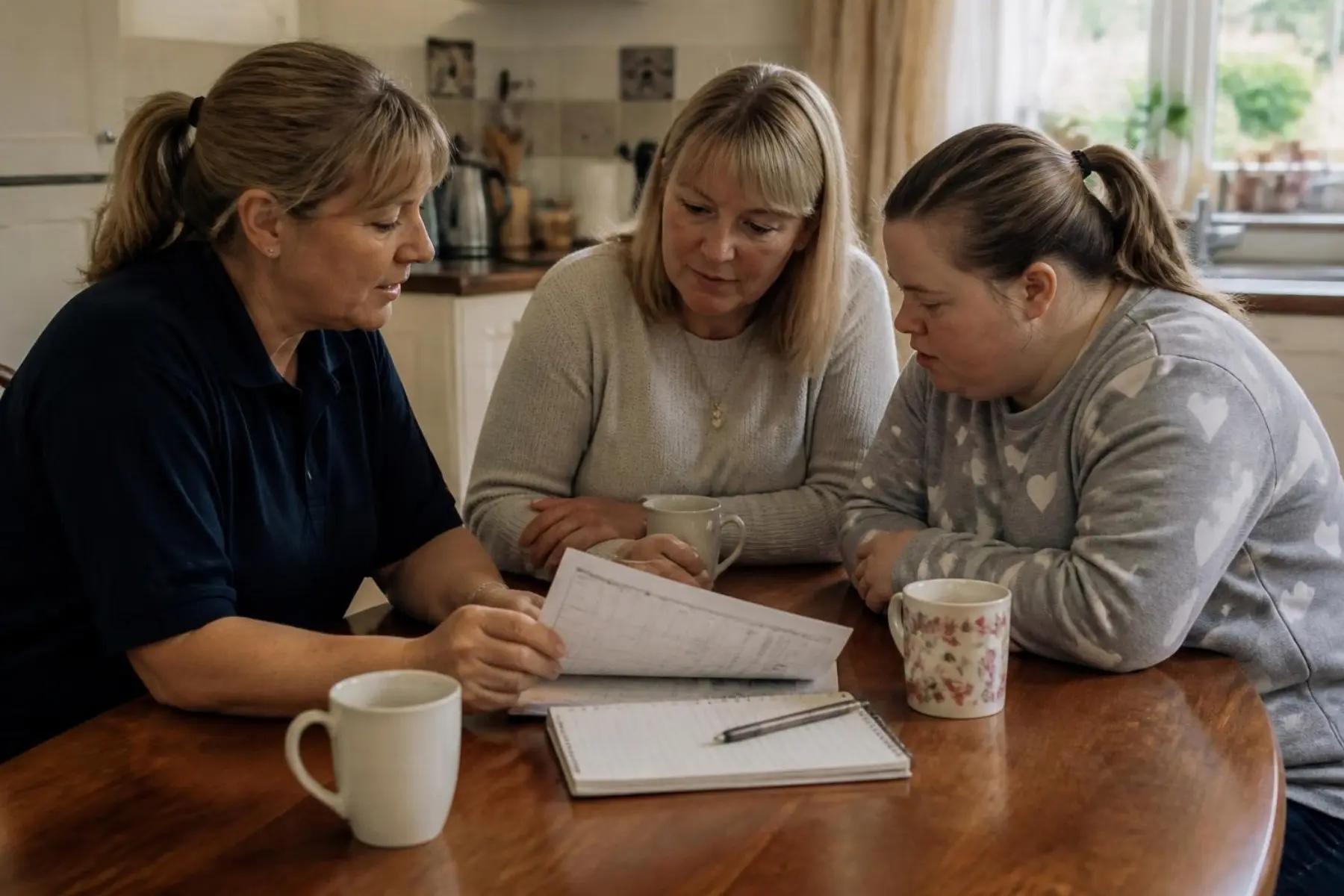
SIL funding is built from a roster of care, which is a document setting out the support arrangement for the household: who lives there, what support each person needs, at what times of day, and how many workers are required at each point.
The logic is straightforward once you see the document. If three people live together and all three need help at 7am, the house may need two workers at that hour. At 2pm, when two are out, it may need one. Overnight it may need one sleepover shared across the household.
The total cost of staffing the house across the week is then apportioned between the people who live there, based on the support each of them requires. That is why SIL is usually cheaper per person in a shared arrangement than support delivered one to one, and it is also why a change in one housemate's needs can affect everyone's funding.
Ask to see the roster of care, not just the dollar figure. The roster is where the reasoning is, and it is the document to question if the amount looks wrong.
What to look at on a roster of care
| Check | Why |
|---|---|
| Are the support hours in the right places? | Mornings and evenings are usually the intense periods. A flat roster across the day often means nobody mapped the real routine. |
| Is overnight support active or inactive? | The cost difference is large. It should match what the person actually needs. |
| How many workers at peak times? | Two workers at 7am for three people is normal. Two workers all day usually is not. |
| Is one to one support included, and when? | Some support has to be individual. It should be visible on the roster rather than assumed. |
| What happens if a housemate moves out? | The apportioning changes. Ask how the provider handles it. |
Why two people in the same house can have different amounts
This surprises people, and it is worth explaining because it can cause friction between housemates and families.
Apportioning is based on the support each person needs, not on splitting the household cost equally. Someone who needs two workers for personal care each morning and someone who needs prompting and supervision will draw different amounts from the same roster. That is the system working as intended, but it means the figures are not comparable and it is not useful to treat one person's amount as a benchmark for another's.
It also means a change for one person can move the numbers for everyone. If a housemate who needed considerable overnight support moves out, the remaining people may need a different overnight arrangement, and the apportioning changes accordingly. A provider should raise that with everyone affected rather than letting it appear as a surprise.
Common misunderstandings
"My SIL funding is my money to spend." Not quite. SIL is funding for a support arrangement, drawn down as supports are delivered against the roster. It is not a discretionary balance.
"A bigger SIL amount means better support." Not necessarily. A larger amount usually reflects higher support needs or more intensive overnight arrangements. The quality question is separate, and it is answered by who turns up and how consistently.
"If I do not use it all, I lose it." SIL is claimed against supports actually delivered. If the roster consistently overstates what is needed, the right response is a review, not spending to the figure.
Questions worth asking your provider
The roster is a live document, not a fixture. Needs change, housemates change, and a roster written eighteen months ago may describe a household that no longer exists. It is reasonable to ask when it was last reviewed and what would trigger a review.
It is also reasonable to ask what happens to the arrangement if the person's needs reduce. A good provider treats that as a normal conversation. A provider who is uncomfortable with the question is worth watching.
Funding decisions themselves sit with the NDIA. What a provider controls is the quality and accuracy of the roster of care that informs them, and how honestly it reflects what the person actually needs.
Common questions
What does SIL funding cover?
Assistance with daily living in the home: personal care, meal assistance, medication assistance, household tasks, daily living skills, supervision and overnight support where it is needed.
Does SIL funding pay for rent or food?
No. SIL pays for support only. Rent, food, groceries and utilities are ordinary living costs paid by the person, as they would be for anyone else.
How is SIL funding calculated?
From a roster of care, which sets out what support each person in the household needs, at what times, and how many workers are required. The total staffing cost is then apportioned between the people living there.