SIL or SDA? The Difference That Decides What Your Funding Pays For

Of all the language in the NDIS, the difference between SIL and SDA causes the most confusion, and it is the one worth getting right before anyone signs anything. The two sound similar, they often appear together, and they pay for completely different things.
The short version: SIL pays for the people. SDA pays for the building.
Supported Independent Living, in plain terms
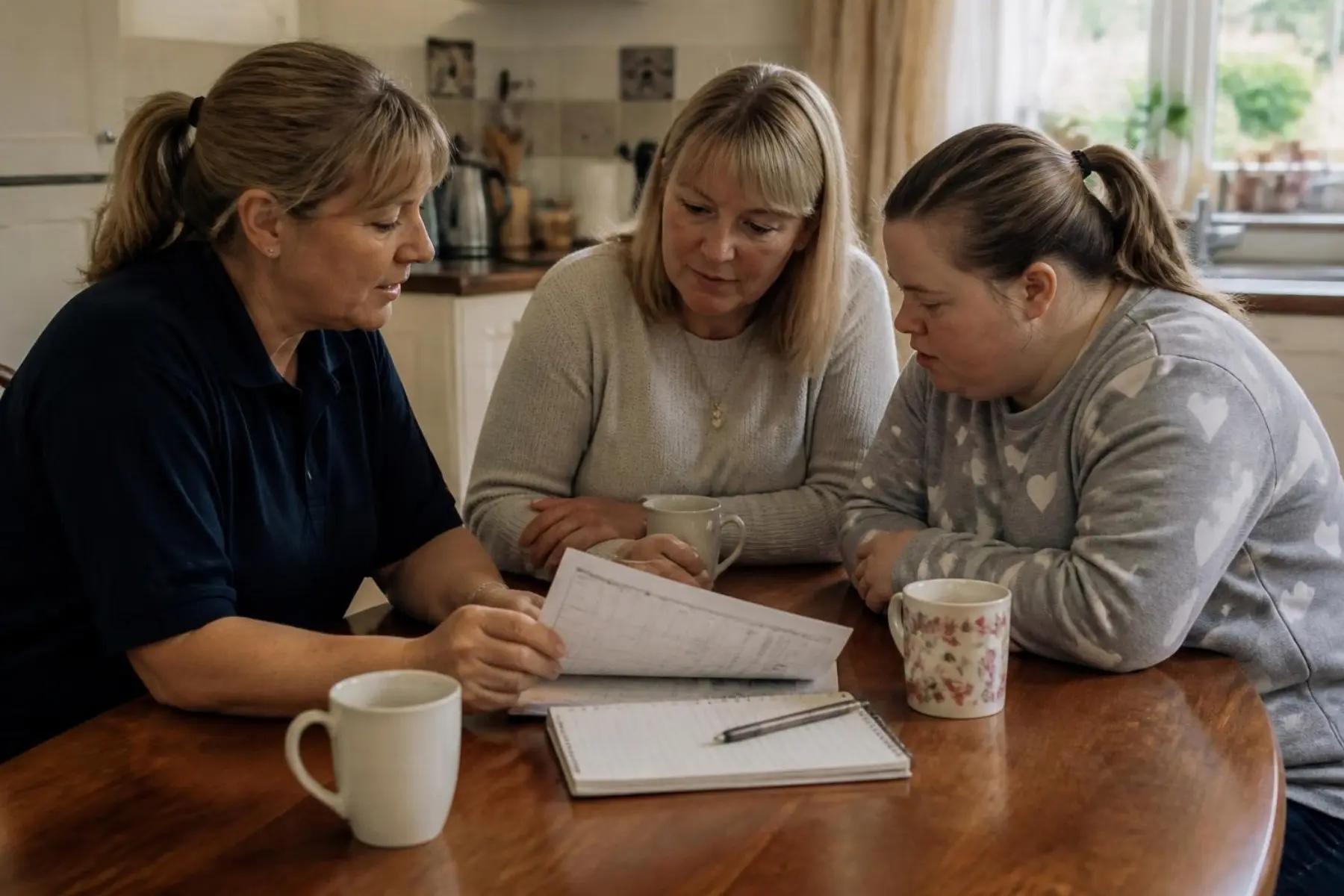
Supported Independent Living, or SIL, is funding for the assistance a person needs with daily life in the place they live. Help with personal care, meals, medication prompting, getting ready in the morning, managing the household, and being safe overnight.
SIL is usually, though not always, about shared support. Several people live in the same house and the support is arranged across all of them, which is what makes overnight and around-the-clock support affordable in a way it rarely is for one person alone.
The important point: SIL is not a building. It is a service delivered wherever the person lives. That can be a house owned by a provider, an ordinary rental, or a family home.
Specialist Disability Accommodation, in plain terms
Specialist Disability Accommodation, or SDA, is funding for the dwelling itself. It exists because some people need housing that has been purpose-built or modified in ways an ordinary rental cannot accommodate: reinforced walls and ceilings for hoists, wider doorways and circulation space, robust construction, or specific fire and emergency provisions.
SDA funding is paid towards the cost of that property. It is not payment for support, and it does not include support.
SDA is deliberately limited. It is intended for a small proportion of participants, generally those with an extreme functional impairment or very high support needs where the built environment itself is part of the solution. Most people who receive SIL do not receive SDA.
The distinction in a table
| SIL | SDA | |
|---|---|---|
| What it pays for | The support a person receives | The dwelling they live in |
| Who is paid | The support provider | The housing provider or owner |
| How common | Relatively common | A small group of participants |
| Tied to a specific building? | No | Yes, the dwelling must be enrolled |
| Covers rent or board? | No | Contributes to the property cost, and the participant still pays a rent contribution |
Why the confusion causes real problems
Three situations come up repeatedly.
People assume SIL requires a special house. It does not. If someone is living in a rental or with family and needs substantial daily support, SIL can be delivered there. Families sometimes delay a conversation for years because they believe the only option is moving into a group home.
People assume SDA includes support. It does not. A person with SDA funding and no SIL funding has a suitable home and nobody to help them in it. The two are arranged separately, often with different providers.
Providers blur the terms in marketing. A provider advertising "SDA homes with support" may be offering both, or may be offering one and hoping to arrange the other. Ask which funding they are actually delivering against, and who provides the other part.
A useful question when touring a property: who is paid the SDA, who is paid the SIL, and are they the same organisation? If they are, ask what happens if you want to change your support provider but stay in the home.
That last question matters more than it sounds
Where the same organisation provides both the housing and the support, changing support providers can feel like it puts the housing at risk. It should not, because they are separate arrangements, but people understandably feel the pressure.
The Australian approach has increasingly been to separate the two for exactly this reason. If you are considering an arrangement where one organisation does both, it is entirely fair to ask, before signing, what happens to the tenancy if the support arrangement ends. Get the answer in writing.
Who typically receives each
SIL is considered where a person needs substantial help with daily living, often including overnight, and where that support is best arranged around a household rather than in short visits. It is not limited to any particular diagnosis. What matters is the level and pattern of support required.
SDA is narrower. It is aimed at participants whose housing itself has to be different: where a standard dwelling cannot be modified enough, where the built environment is central to the person's safety, or where high physical support needs require design features an ordinary home does not have. Because it is a housing payment attached to an enrolled dwelling, it is assessed differently and granted to comparatively few people.
It follows that the two questions are asked at different points. "Does this person need substantial daily support?" is a support question. "Can that support be delivered safely in an ordinary home?" is a housing question. Only if the answer to the second is no does SDA enter the conversation.
What this means for a family weighing up options
Families often arrive at this topic at a difficult moment: a carer's health has changed, a young person is finishing school, or a living arrangement has stopped working. In that moment the pressure is to find a place, and the place tends to dominate the thinking.
It is usually more productive to describe the support first. What does a good day look like, what help is needed and when, what happens overnight, and what has gone wrong in previous arrangements. That description is what a provider can respond to concretely, and it is what an NDIA planning conversation is built around. The housing question follows from it rather than the other way round.
Where to start if none of this is settled yet
If home and living is being discussed for the first time, the sequence that usually works is: establish what support the person actually needs day to day and overnight, then work out where that support can be delivered, and only then consider whether the dwelling itself needs to be specialised.
Starting with the building is how people end up in a house that suits a wheelchair but not a life. Starting with the support tends to produce better questions about the housing.
Decisions about what funding a person receives sit with the NDIA, and nothing in this article changes that. What you can do is arrive at the conversation using the right words, because SIL and SDA answer different questions and being precise about which one you are asking for makes the conversation considerably shorter.
Common questions
What is the difference between SIL and SDA?
SIL funds the support a person receives with daily living. SDA funds the dwelling itself, where the building needs to be purpose-built or modified. They are funded separately and most people with SIL funding do not have SDA funding.
Can I get SIL funding if I live in a normal house or rental?
Yes. SIL is support delivered wherever a person lives. It is not tied to a specially built property.
Does SDA funding include support workers?
No. SDA is a contribution towards the cost of the dwelling only. Support is funded separately, usually through SIL or other support funding.