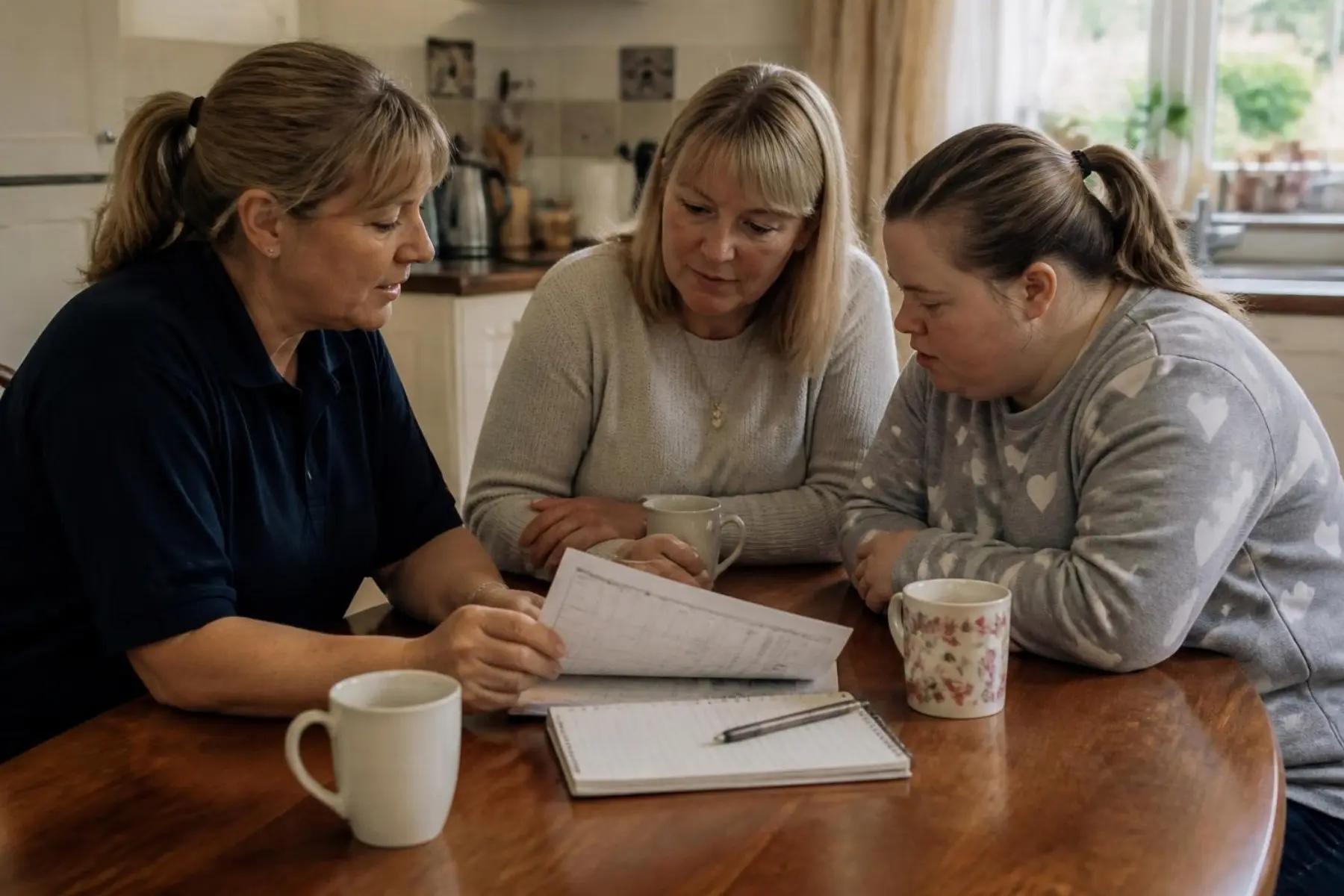
Can Core Supports Pay for Cleaning, Laundry and Meals?

Household tasks are one of the most underused parts of NDIS plans. People assume cleaning is a luxury, or that asking for help with laundry is somehow not what the funding is for, and the money sits there unused while they struggle. This is a plain guide to what NDIS core supports cover when it comes to cleaning, laundry and meals.
Where household tasks sit
Assistance with household tasks sits inside core supports. Core supports funding is generally the most flexible part of a plan, which means in most cases funding can be used across the core supports categories according to what the person actually needs, rather than being locked line by line.
That flexibility is the thing most people do not realise they have.
What is generally funded
- Cleaning of the areas of the home the person uses, where their disability means they cannot do it themselves
- Laundry, washing, drying, folding and putting away
- Changing bedding
- Dishes and kitchen cleaning
- Meal preparation assistance, from prompting and supervision through to a worker preparing meals
- Shopping assistance, either supporting the person to shop or shopping on their behalf
- Help with rubbish, and basic yard access where it affects safe access to the home
What is not funded
- The food itself. Assistance to prepare a meal is support. Groceries are an everyday cost.
- Cleaning products and consumables, in the ordinary case.
- Tasks for the rest of the household. The funding is for the participant's needs, not the family's housework.
- Home maintenance and repairs, which are a different matter entirely.
- Major garden work that is not about safe access.
The test that decides it
The question is not whether a task is unpleasant or time-consuming. It is whether the person's disability is the reason they cannot do it, and whether the support is reasonable and necessary in the context of their plan.
Someone who cannot stand at a sink, cannot safely use an oven, cannot manage a vacuum, or becomes exhausted or overwhelmed by a task that others find routine, is in scope. Someone who simply would rather not do the vacuuming is not, and that is the line.
A useful way to frame it with a planner: describe what happens when you try to do the task, not that you want help with it.
Cleaning is support, not a cleaning contract
This distinction causes confusion. NDIS funded cleaning is delivered as disability support, which means it is generally provided by a support worker working with or alongside the person, at support rates, within the plan's arrangements.
It is not the same as engaging a commercial cleaning company for a flat fee, and the two should not be compared purely on hourly price. It also means the worker can often do more than clean: the same visit might include laundry, a hand with the shopping list, and some prompting through a task the person is building confidence with.
For some people, a support worker who comes weekly and works through the house alongside them is more valuable than a cleaner who arrives, cleans and leaves, because the point is partly to maintain the skill and the routine.
Why people underuse it
Three reasons come up repeatedly.
Nobody explained the flexibility. People treat the categories in their plan as fixed allocations and do not realise core supports can usually be used across categories.
They feel they should manage. Particularly among older participants and people who have been independent for a long time. Accepting help with housework can feel like conceding something.
They did not describe the need well at planning. "I need help around the house" produces less than a clear account of what specifically goes wrong and why.
How to describe it at plan reassessment
The difference between a vague request and a fundable one is specificity. Compare:
| Less useful | More useful |
|---|---|
| "I need help with cleaning." | "I cannot stand for more than a few minutes, so I cannot vacuum or clean the bathroom. The bathroom has become a safety issue." |
| "Cooking is hard." | "I cannot lift a full pot safely and I have burnt myself twice. I need someone to prepare meals with me twice a week." |
| "The laundry piles up." | "The laundry is down external steps I cannot manage alone, so washing only happens when family visit." |
None of this guarantees an outcome. Funding decisions sit with the NDIA and depend on the person's individual circumstances. What specificity does is give the decision maker something concrete to assess, rather than a general statement they cannot act on.
How this works alongside other supports
Household tasks rarely arrive on their own. In practice a support worker's visit often covers several things: some personal care, a hand with the laundry, preparing a meal together, and a trip to the shops. That is normal and it is usually the most efficient way to use the funding, because the alternative is several separate visits with travel attached to each.
It is worth thinking about the shape of the week rather than the individual tasks. Two longer visits that cover everything will often deliver more than four short ones, and they give the worker enough time to do things properly rather than rushing.
What to look for in a provider
For household support specifically, three things matter more than price.
Consistency. Someone who knows where things live and how you like them done gets more done in an hour than a stranger does. Ask how many workers would cover your visits.
Flexibility within the visit. Some weeks the priority is the bathroom, some weeks it is the laundry and a shop. A provider who insists on a fixed task list is less useful than one who works to what is needed that week.
Willingness to work alongside you. For many people the goal is not to have the house cleaned for them, it is to keep doing as much as they can with support. Those are different services and worth being explicit about.
If you already have the funding
If household tasks funding is already in your plan and going unused, that is worth looking at now rather than at the end of the plan. Support that is not used is not banked, and the practical effect of underusing it is simply that you did without help you were entitled to.
Common questions
Can NDIS core supports pay for house cleaning?
In many cases yes. Assistance with household tasks sits within core supports and can be funded where a person's disability means they cannot do the task themselves. It is delivered as disability support rather than as a commercial cleaning contract.
Does the NDIS pay for food or only for help preparing it?
Only the assistance. Support to shop for and prepare meals can be funded. The groceries themselves are an ordinary living cost.
Can household tasks funding be used for the whole family's housework?
No. The support is for the participant's needs arising from their disability, not general housework for other members of the household.